 by
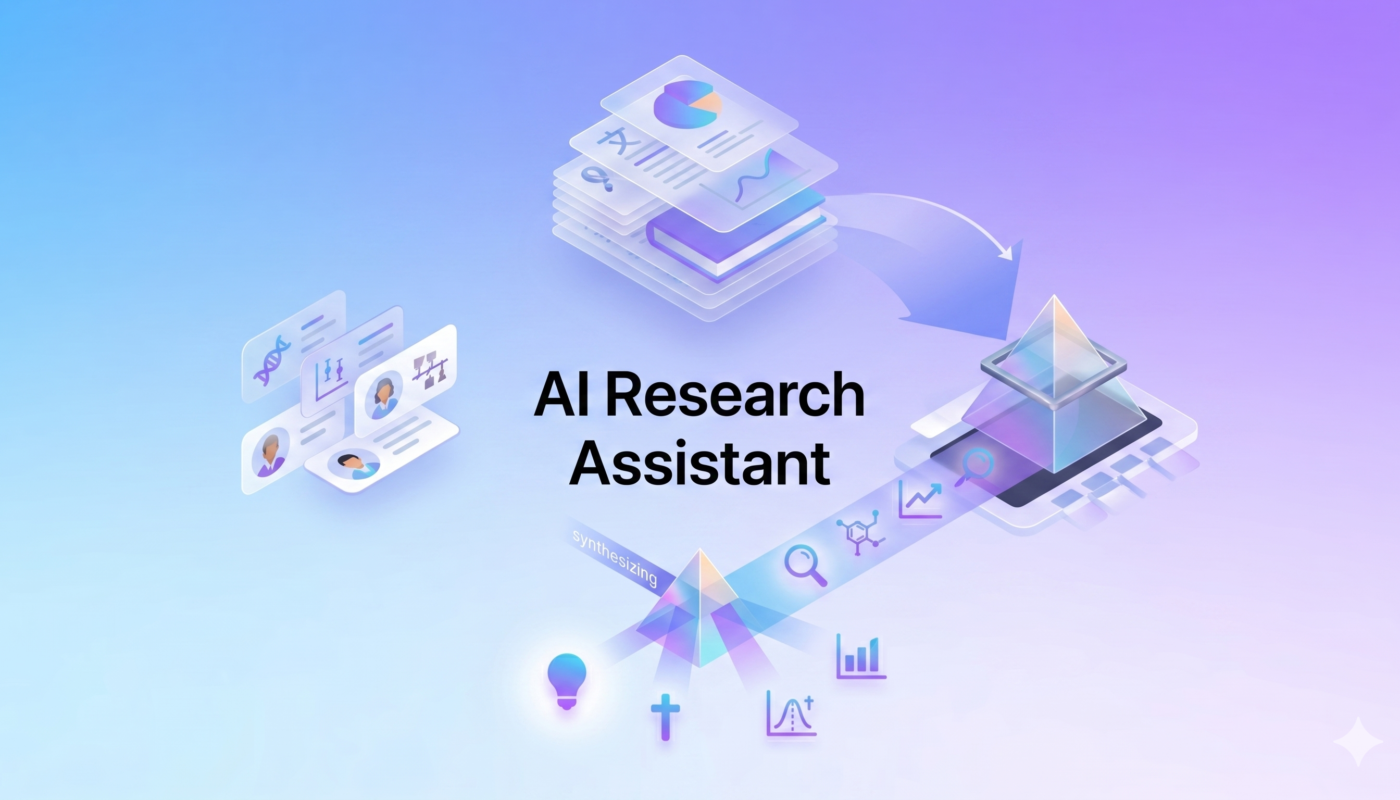
by Research used to mean opening dozens of tabs, repeating similar searches, copying notes into a document, and manually connecting evidence across sources. AI research assistants can now automate much of that mechanical work. The best tools can plan a research task, search multiple sources, read documents, compare information, and produce a structured report with citations.
That does not mean the researcher disappears. AI can reduce the time spent finding and organizing information, but important conclusions still need source review, context, and professional judgment. In 2026, tools such as ChatGPT Deep Research, Gemini Deep Research, and Perplexity Research are useful because they turn a complex question into a multi-step research process rather than a single search result.
What Makes an AI Research Assistant Different From Normal Search?
A normal search engine returns links in response to a query. A research assistant can run a sequence of searches, change direction when new information appears, read multiple documents, and synthesize a final answer.
A typical research loop
- Understand the requested outcome.
- Create a research plan or subquestions.
- Search multiple sources.
- Read relevant pages and documents.
- Compare findings and resolve conflicts where possible.
- Identify gaps and search again.
- Produce a structured report with source links or citations.
This is especially useful for questions that cannot be answered well by one webpage.
ChatGPT Deep Research
OpenAI’s current Deep Research documentation describes a workflow where the user specifies the outcome, selects sources such as websites, uploaded files, or connected apps, reviews a proposed research plan, follows progress, and receives a documented report.
Useful for
- Market and competitor research.
- Multi-source technology comparisons.
- Research that combines uploaded documents with web sources.
- Complex purchasing or planning decisions.
- Reports where the researcher wants to inspect citations.
OpenAI’s 2026 update also added more control over trusted sources and connected apps, which is useful for professional research that should be restricted to approved information.
Gemini Deep Research
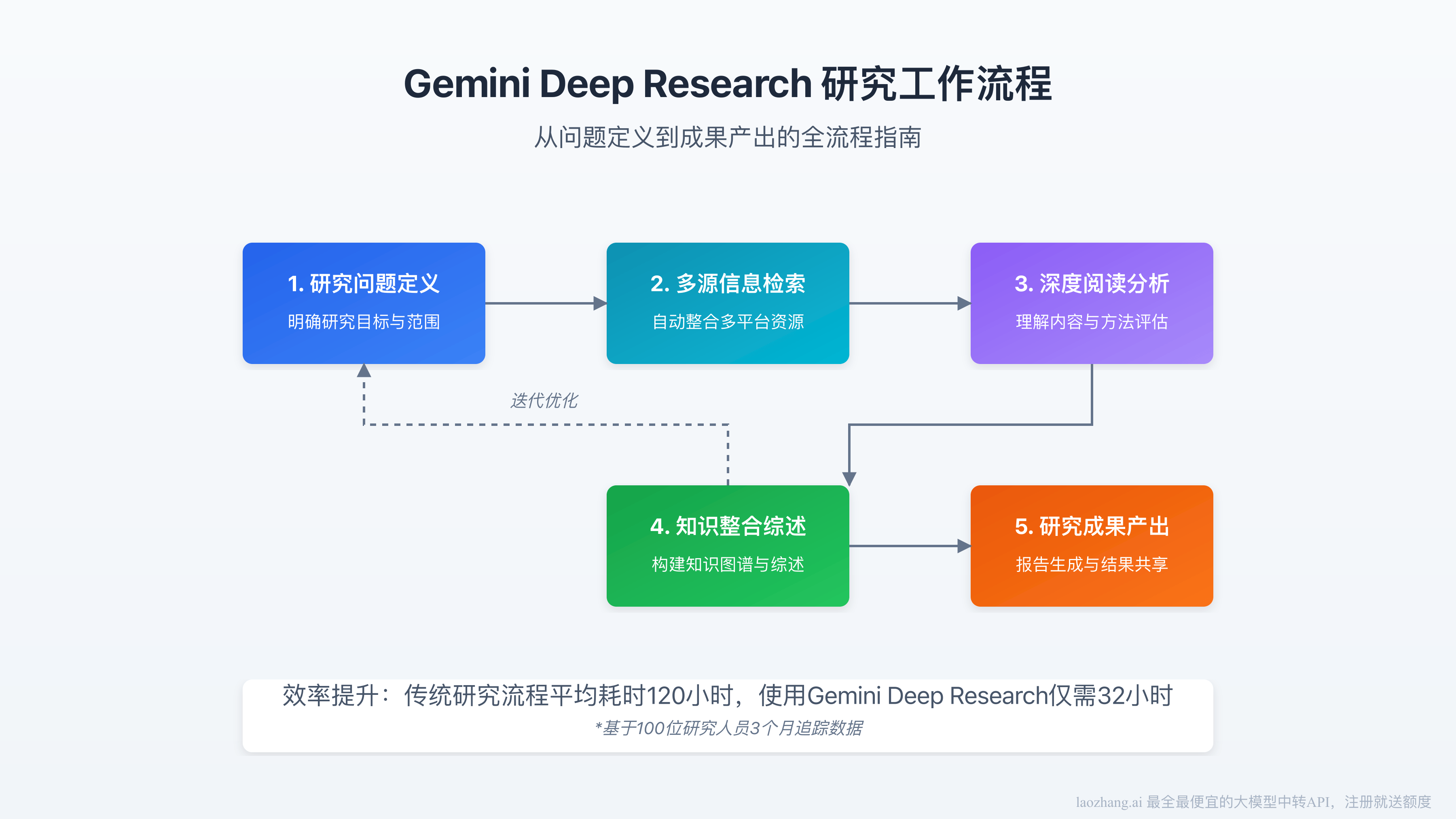
Google’s current Gemini Deep Research guidance supports in-depth research using Google Search and, where available and authorized, additional sources such as Gmail, Drive, uploaded files, and NotebookLM notebooks.
Useful for
- Users whose research material already lives in Google services.
- Combining web research with personal or organizational files.
- Long-form reports that require several research steps.
- Projects where source selection can be customized.
The important operational point is permissions: adding personal or organizational sources can make research more relevant, but those sources should be intentionally selected for the task.
Perplexity Research
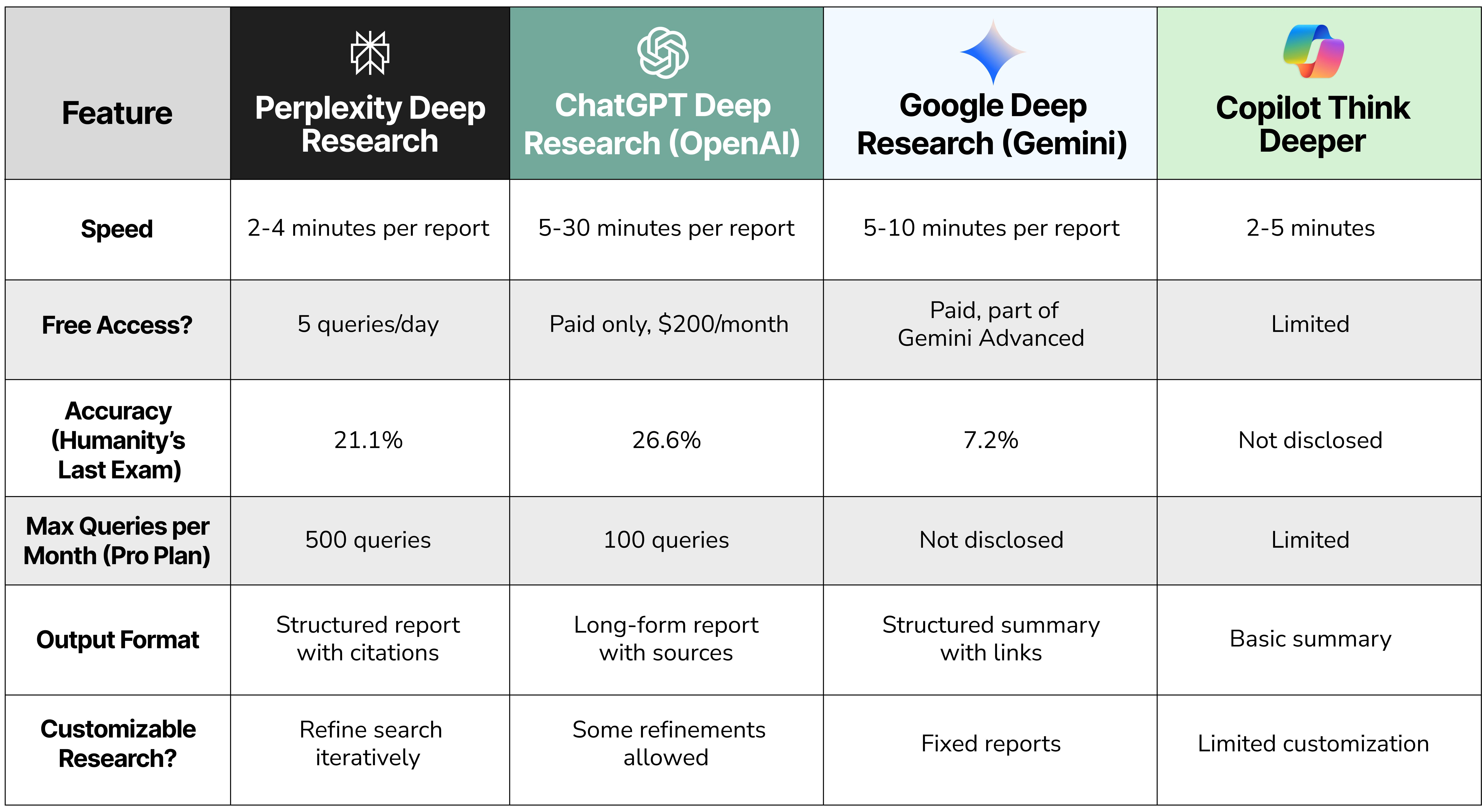
Perplexity’s July 2026 Research mode documentation describes an iterative process that performs many searches, reads sources, reasons about next steps, and produces a comprehensive report. Perplexity also supports document analysis and deeper research workflows in its current product.
Useful for
- Fast web-first research.
- Current affairs and market scanning.
- Product or technology comparisons.
- Research where source links need to remain visible.
- Projects that benefit from an interactive search-oriented interface.
Where AI Saves the Most Research Time
| Research step | Manual approach | AI-assisted approach |
|---|---|---|
| Question breakdown | Researcher creates subquestions manually | AI proposes a research plan for review |
| Source discovery | Repeated searches and tab review | AI runs multiple searches and ranks relevance |
| Document reading | Read every file linearly | AI extracts relevant sections and themes |
| Comparison | Manual notes and tables | AI structures similarities and differences |
| Draft synthesis | Write report from notes | AI creates a sourced first draft |
| Gap detection | Researcher notices missing evidence | AI can suggest unanswered questions for another pass |
The largest time saving often comes from organization and synthesis, not from skipping verification.
A Better AI Research Workflow
1. Define the decision or deliverable
Instead of asking “research CRM software,” ask for a specific outcome: “Compare five CRM platforms for a 40-person B2B sales team, prioritizing automation, API access, migration effort, and total cost.”
2. Give the assistant source preferences
Ask it to prioritize official documentation, government data, primary research, standards bodies, or peer-reviewed papers where appropriate. Restrict domains when the research requires high-trust sources.
3. Provide internal material
Upload the company brief, requirements document, spreadsheet, or existing analysis. The research becomes more useful when the assistant understands the actual constraints.
4. Review the plan before deep research begins
Make sure the research covers the questions that matter. Remove irrelevant branches before the assistant spends time on them.
5. Ask for a structured result
Useful formats include decision matrix, executive summary, risks, evidence table, open questions, and recommendations with confidence levels.
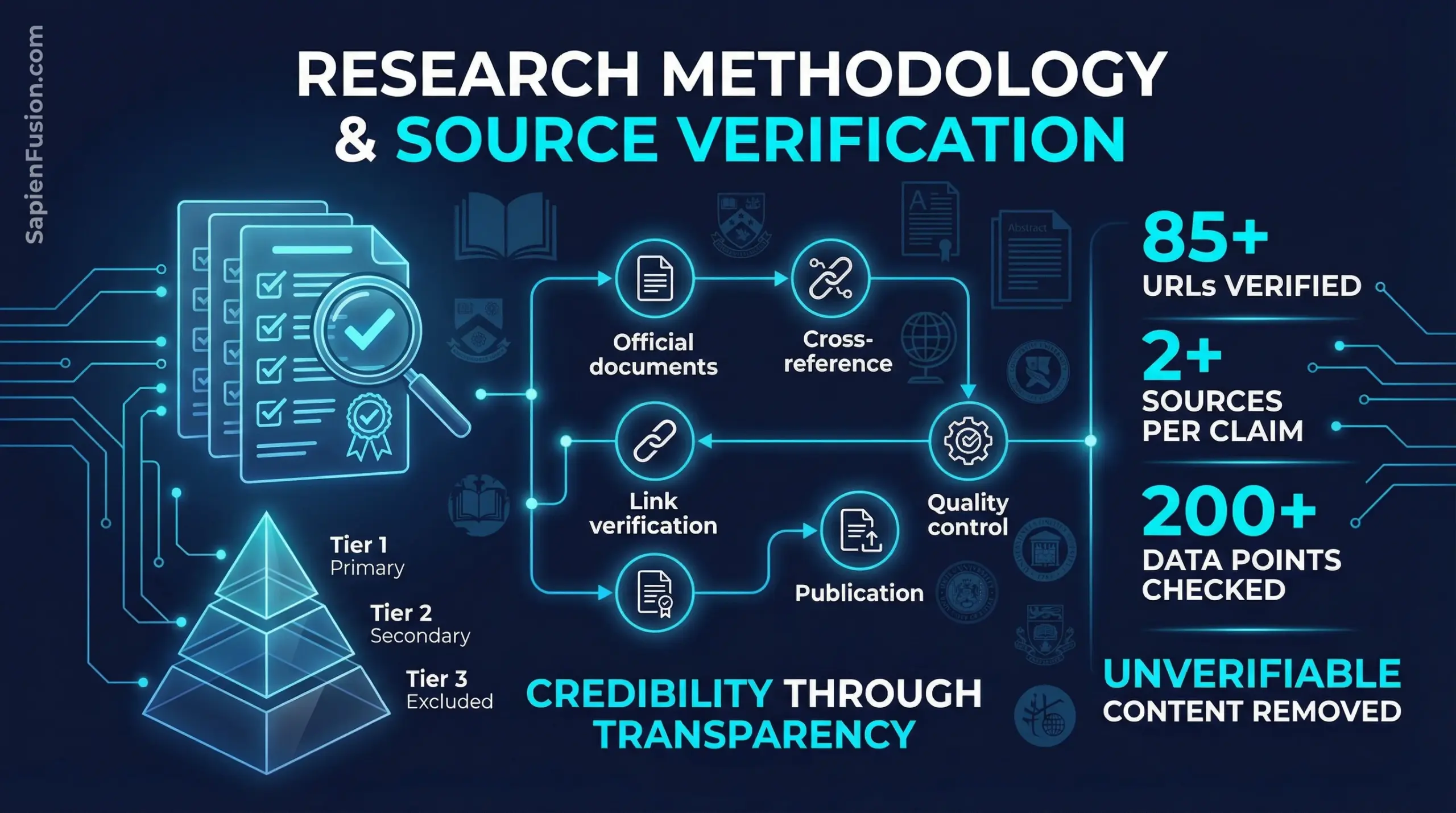
6. Verify the load-bearing claims
Open the sources behind the facts that materially affect the decision. Check dates, definitions, methodology, and whether the source actually supports the wording.
Research Tasks That Benefit Most
- Competitive landscape analysis.
- Software and vendor evaluation.
- Industry and regulatory research.
- Technical architecture comparison.
- Travel or procurement planning with many constraints.
- Literature discovery and research orientation.
- Due-diligence preparation.
- Policy or standards comparison.
For smaller everyday questions, ordinary search or an AI chat response may be faster. Deep research is most valuable when the question has several parts and source quality matters.
Where AI Research Can Go Wrong
Weak sources
A report can look comprehensive while depending on repetitive blogs or marketing pages. Ask for primary sources and inspect the evidence behind important claims.
Outdated information
Product features, laws, prices, and leadership roles can change quickly. Research prompts should specify the required date and favor recently updated official material.
False synthesis
Two sources may describe different definitions or populations. AI can mistakenly combine them as if they are directly comparable.
Citation mismatch
A citation may be relevant to the topic but not support the exact sentence. Open the source for high-impact claims.
Missing local context
A global answer may not apply to a specific country, industry, organization, or user. Include those constraints in the research brief.
AI Research Efficiency Checklist
- State the final decision or deliverable.
- Define geography and date range.
- Prioritize source types.
- Upload relevant internal documents.
- Review the proposed research plan.
- Request a structured final report.
- Ask the assistant to separate facts from assumptions.
- Open primary sources for important claims.
- Record unresolved questions.
- Save the final source list for future updates.
For a deeper quality-control process, see our guide to verifying answers from AI research assistants. For broader daily work tools, see AI productivity apps.
Frequently Asked Questions
Can AI research replace a human researcher?
It can automate a large amount of searching, reading, and synthesis, but human researchers remain important for framing the question, judging source quality, interpreting uncertainty, and making accountable decisions.
Is deep research better than normal web search for every question?
No. Simple factual questions are usually faster with normal search. Deep research is useful for multi-step questions that require comparison, synthesis, or evidence from many sources.
How do I know whether an AI research report is reliable?
Check whether the important claims link to appropriate primary sources, whether those sources are current, and whether the wording matches what the source actually says.
Conclusion
AI research assistants can remove hours of mechanical research work by planning searches, reading documents, comparing sources, and drafting structured reports. Their real advantage is not that they eliminate verification; it is that they let the human researcher spend more time on judgment and less time moving between tabs.
Use a strong brief, control the source set, review the research plan, and verify the claims that carry the decision. When those habits are in place, deep research becomes a practical professional workflow rather than a shortcut to an unverified answer.